Downstage has presented performing arts in Wellington, New Zealand since 1964.

In 2008 we began programming work built around partnerships with independent artists and companies.

This artform is a dialogue. We will read and respond to all comments.

See you at the theatre.

Wednesday, August 10, 2011

It won't happen overnight!

Vagabonds & whores (in a very Gay production)
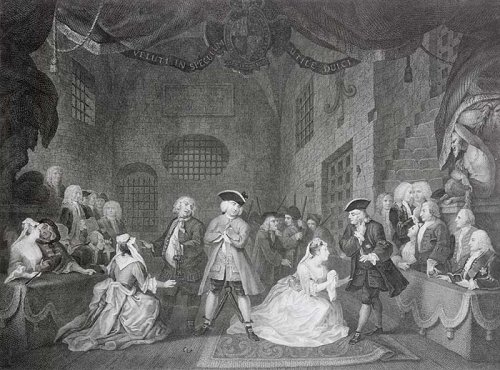
'The Beggars Opera', 18th c

In 18th century England it was the interpretation of a work that was far more important to an audience than who wrote it or even appeared in it.  They believed the many strident disagreements and frequent controversies surrounding works of art were as important as the work itself.

These interpretations threatened the status quo or establishment of the day, which is why anything new was ridiculed by those who were threatened the most by their implications. This in turn is the reason why right up until the 19th century the theatre was seen as the profession of vagabonds and whores. It was important to keep it in its place while people wrestled with the momentous changes taking place within European society at the end of the 20th century. 

Dame Pat Evison in 'Happy Days' by Samuel Beckett
Downstage 1965
The establishment of Downstage made a huge impact on society back in the 1960s. Not simply because it was the first or only professional theatre in New Zealand, but because it began a process of looking at the world from another perspective, an act of courage and the beginning of a new cultural identity.

At Downstage we have extended the meaning of creation beyond just the invention, fabrication or handiwork of getting a show to the stage.  We understand that a work of art is not created overnight but over time. 


Nor is it a book to be read or a picture to be looked at and commented on; it is a live performance; not a thing but an event.  Within the performing arts the work is the production as a whole - the actual realisation and interpretation of the work and its relationship to an audience and the ensuing conversations it generates.

Jack Shadbolt and Eli Kent in'The Intricate Art of Actually Caring'
Downstage 2009 & 2011
A singular outing will not usually be enough to generate heat.  Productions need time to simmer, so we embrace the re-working and re-staging of productions.  In each case we’ve found the return season has developed into a richer brew, and attracted a larger audience base than the first outing. 

Lately we’ve been keenly aware of the need to enliven discussion and debate over the relevance of our productions to contemporary life - like the audiences of 18th Century England who revelled in hotly debating the art of their time.

An ongoing conversation between artists and audiences?  This is what it means to create a masterpiece.


Tuesday, July 5, 2011

We’re all creative, but can we all be artists?

This is what I know.
Lightbulbs: Cheap.
Electricity: Expensive
Ideas are a dime a dozen. Turning ideas into realities, practical realities; making them actually happen, is a whole other story. And then having another idea, to start all over again, to have the ability to do that over and over – coming up with great ideas and making them happen – over the span of a career is something else altogether.

So the issue for me is less about whether or not we are all creative and more about how do we sustain that creativity and remain productive over a lifetime commitment to our art. And even more challenging, how do we make it earn us a living?


Born to act
The author (left)
  clearly born to act - 1980
This notion that you are “born to be an artist”, or in theatre terminology, “born to act”, (that you can’t do anything else, that it is a God-given vocation) has its origins in history. As an actor for instance you would have been born into a family of players and learnt your craft by observing those around you. Or maybe you were sold into a circus or travelling troupe or even run away to do the same. Back then, there were no professional training institutions issuing tertiary degrees in the creative industries of performing arts.

Times have changed. Now every year, hundreds of graduates – full of great ideas and a student debt – leave the protective and creative environment of a training institution and start on the career path of looking for work or at least an outlet for their creativity.


So, you think you can act?
Cinderella listens to her iPod
So what? Reality TV may have changed everyone’s idea of what it takes to be an artist by believing in the myth-making and money-making and the hype around “living your dream” – The Susan Boyle Story being just another version of Cinderella – but the question is can these people – the winners of Idol and So You Think You Can Dance, have talent or X-factor etc. – sustain a life-long career? Only time will tell if they live happily ever after.

Sadly, in this digital age the camera does more than lie, it can visually and aurally enhance talent (or at least the appearance of it).

"Two tickets for this evening, please" 
Thankfully, the digital age has given rise to another breed of artist. In the US they call them the Ren Gen or Millennial Generation, in New Zealand and Australia they are called Computer or Digital Natives. And while we hate labels; it’s just a shortcut way of identifying the generation that has grown up with, and never known a world without, digital technology, computer games, mobile phones and i-pods.


This generation is smart, stylish, tertiary educated, well connected, socially networked, locally-based and internationally-focused. They want to make money; to make a difference; change or improve their lot or the entire world order. They are thinkers, doers, collaborators. And best of all they’re entrepreneurial.

Entrepreneurs have been around for a long time but the digital age has given them power, speed and visibility. They have learnt to subvert the well-trodden career paths and created their own direction, at times to great success (The Flight of the Conchords being a local example). They are turning great ideas into realities. They are the Independent Sector.

Hipsters, entrepreneurs,
Downstage class of '03
And cities that cultivate (or have by osmosis) an “indie culture” – thrive! Think Seattle, Portland, Toronto, Glasgow, Manchester, Melbourne, Brisbane, Wellington. There has been a great deal written about this – especially cities that have reinvented themselves by capitalising on their creative communities.

And this is what I also know: all this “greativity” (great creativity) goes nowhere without recognition and support: infrastructure, mentoring, guidance, money, professional development, encouragement, opportunity.

Supportive Acts
Downstage designed the Presenting Partners programme to support the independent theatre sector, to reinvigorate the local theatre scene, to provide opportunities to showcase work, to guarantee paid employment and investment in independent artists and companies and to make projects happen – to ensure that great ideas see the light of day. We are just at the beginning of this way of working and we have BIG BOLD IMPOSSIBLE ideas.

We’ve been around for a long time – a life-time – 47 years and we plan to be around for a lot longer. Downstage is a repository of all that has gone before, a vibrant history that has led to our evolution. That knowledge and experience gives context and shape – a clear direction. By being a dynamic resourcing partner, we are not looking to back winners but to invest in people and their ideas, and to help them carve out sustainable careers that have a future.

Friday, April 1, 2011

Stanford and Beyond

I was rudely awakened this morning by a phone call from Tim Spite. Tim and his wife Gabe are the co-writers of The Spy Who Wouldn't Die Again opening tonight at Downstage. "Gabe's gone into labour and we're at the hospital", he tells me. "It looks like a Cesarian section. You'll have to cancel the show." My brain whirls into action: call in staff, contact audience, inform Board, reschedule media night." The list is endless. "How's Gabe?" I say. "Fine. It's April Fool's." Sadly, it didn't click, Tim had to repeat that phrase three times and add "It's a joke!". What? "Got you again!" Tim says gleefully, having done the same thing last year!

Work is not the opposite of fun! Work is not the opposite of fun! I chant. Work is not the opposite of FUN! My mantra while plotting revenge!

My previous blog stated my intention to implement small shifts in thinking in order to make a big difference to our company and our community. The first lesson to come out of the ENPL was from the "Ropes Course", Day Two. I took to heart the words of one of our team members who, like me, chose to be a member of the ground crew not a high-flyer. She said (I paraphrase): that when you are not close to the heat of the action - the main goal - you can feel isolated and proactively marginalised from the core group. I certainly experienced that and was aware this could happen to a person or be self-inflicted. I had to work hard to ensure my contribution was not dismissed and that my role was acknowledged as vital to the overall team success without my having to explain or rationalise my choices.

Keeping this in mind, I have stepped up my interaction with casual Front of House staff. After all, they are our frontline people, and have direct contact with our audiences. It's not that there was no contact or consideration for the great job already being done by a fantastic team of people. We had already instigated a different approach to our recruitment process of ushers and bar staff with good results before I left and run a customer service session with staff. In addition, programming had begun to provide cheat sheets of show information (previously generated for the Box Office) for use by FOH staff. This week, we invited casual staff to attend the dress rehearsal of "Spy" and a briefing session about the production. During the interval FOH Manager, Tony Hewitt and I discussed the show, its style and content, and then outlined our Resident Company programme (RC), its purpose and value and where this sat within the Downstage Business Model. Part of the first RC intake was SEEyD, the creators of Spy, and this world premiere marks the end of their three-year residency. (The benefits of this RC programme will be published in our 2010 Annual Report and made available on our website.)

Then I turned the spotlight on the staff with the first in a series of sessions to be conducted over the next few months, which had us examine some of the topics covered at Stanford. We are doing this in the context of our three strategic outcomes: our artists, our audiences, our community. This preliminary session was attended by all staff - during a production week (they really are stars!), looked at the traditions of theatre, the language and lore of enabling "shows to come in and shows to go out" year after year after year. Because regardless of the recent changes to our business model, the core business remains the same, the this company has an outstanding track record of being able to deliver to task and on time. This is project management of a very high calibre and under the current administration and Presenting Partners programme (PP), to budget. (Generating increased revenue through box office, donations and government funding is a separate issue.)


Little known fact: Downstage generates 60% of its income through ticket sales.


I then invited our Associate Producer, Sonia Hardie, to present one of her techniques that enables her to play a part in ensuring the "show must go on". This was a "props table", the area backstage that lays out all the properties or objects actors use during the production such as glasses, cell phone, bottle of fake whiskey etc... These are laid out on a table criss-crossed with masking tape, labelled with the character's name and divided into acts or scenes, depending on the complexity of the play. Mess with this table and you have Sonia to answer to. (Sonia now plays a mentoring role within the company, passing on her skills to incoming companies whose stage managers may not have had formal training).

This short demonstration easily translated into other areas of our work, illustrating that systems are essential for flow of work and team co-operation. Remove some of the elements without telling people, dumping rubbish on other's work, whether figuratively or literally, or simply not following the plan, step by step, makes for a rough and uncertain voyage. This discussion led into the importance of our Strategic Framework, a tool we have been using since 2008, and one that has enabled us to move forward with a clear path to follow into an unknown future. Using the same framework, we are now preparing the final stages of our application for multi-year funding for the next five years. And as they say in the theatre "the plot thickens!"

And finally, I invite staff and all interested parties to comment at any time and provide other perspectives on any of the content in this blog or the up-coming sessions.

Friday, March 25, 2011

Day 18: The Final Postcard

I'm taking a photo when two people cross in front of me. "Tourist Alert!" I say.

"What did she say?"
"Tourist alert."
"That is so funny." (said without so much as a smile.)

There is a great deal I will take with me from this trip, the deadpan sense of humour is one of them. This is my last postcard. I am now home sitting at my desk looking out onto a brilliant Wellington day. The city has really turned it on for my return. It feels good to be here and I'm looking forward to catching up with everyone.

United Airlines finally lived up to its reputation and I ended up having an extra day in San Francisco. I buddied up with a fellow passenger and we took off for SFMOMA. My companion was a museum docent (visitor guide) and we were given free entry. So I got to see my first Paul Klee exhibition and better still works by Frida Kahlo and Deigo Rivera, and I also dropped in on Jessica at counterPULSE.

On our last day of the ENPL we had the opportunity to say a few words, much of what I wanted to say was echoed in those who spoke before me: great professors, lasting friendships, life-changing insights (you gotta love: work is not the opposite of fun!), outstanding accommodation and service, so much to take back and digest.

When I spoke I was surprised at the well of emotion that bubbled up (awkward!) but what I said rang true: this course saved a life, not just the life of a theatre but it's community. A theatre contributes more than entertainment, we also contribute to the local enconomy. We may be a small theatre company on the edge of the world close enough to Antartica as to be insignificant, and yet we have stories to tell - past, present and future - and an irrepressible way of telling them, and the ambition and will to take them to other parts of the world.

Stanford also saved my life. I have worked as a professional theatre practitioner since I was 19 years old. My first engagement was with Four Seasons Theatre, Whanganui. I had been captured by the spirit of performing since age 11, when I started theatre workshops with Mrs Brady of the Brisbane Children's Theatre, in her suburban Corinda home and held ransom by the myth of fame and fortune. But I have been lucky enough to work with people who showed me the value and power of creative endeavour and its capacity to have us think differently; hopefully, more humanely.

I have never forgotten my first experience of theatre nor that seminal Downstage production of Arthur A. Kopit's "Wings" with Alice Fraser. It shifted my world-view. I align with DAE when they say, "the human spirit brings light and insight to the darkness". Its a fellowship I am very proud to be part of, and this pride extends further into the non-profit family. It was an honour to be in such esteemed company and I thank you all for the privilege of hearing your stories and ambitions to change, to grow and to make this planet a better more loving place to live.

As I said on the last day, I am not going back to Downstage to make extravagant changes, I go back to make small shifts that I trust will make a big difference. I also want to take this opportunity to express my appreciation for my Board of Directors who made this opportunity possible and thank my staff who held the fort in my absence. "I am because you are."

And that's all from me. At least for now.

Day 17: Degenerate Art Experience

Degenerate Art Ensemble (DAE) is a Seattle-based performance art group that defies definition. Founded as an experimental orchestra in 1999, the company is an evolving collective of sound engineers, artists, filmmakers, composers, costumes fabricators, physical theatre performers, dancers, musicians, instrument makers, graphic designers and anything in between. The company has been around for about 15 years involving anywhere between six - 20 ensemble members on any one show. They have been described as some of the most "richest, interdisciplinary, immersive, gleeful work in Seattle".

Taking their name from an exhibition mounted by the Third Reich in 1937 entitled Degenerate Art (it showcased some 650 modernist works, believed to defile the purity of the Nazi Party line but in fact, proved so popular, it had to be taken down!) DAE performances are a mad mix of dance, music, projection and installation. What differentiates this company from most presentations of performance art is this company cares about its audience.

"Our audiences matter, we share their dreams and respect their intellectual curiosity." I didn't get to see a performance but a retrospective of their work is being currently exhibited in the Fryre Museum - in itself a first of its kind and a grand undertaking. (Ironically, the Fryre started out in life as home for late 19th century German paintings!) As luck would have it, the day I visited the museum, an artists talk and tour of the exhibition had been scheduled and numerous DAE company members were present. I got to chat with co-director and founder Joshua Kohl, sound and installation artists, Robb Kutz and Nik Weisend - they reminded me of a number of Wellington artists who have worked at Downstage - their ideas and enthusiasm were infectious. They had this to say about the company, "There is great darkness in the world, the human spirit brings light and insight. We believe there is great beauty in the darkness" And while this sounds very heavyweight, they were delightful, so it not surprising their work has been described as: “whimsically disturbing!" Wandering around the exhibition, what I saw was reminiscent of Warick Broadhead’s work in the 70s and 80s - part spectacle, part perforamnce art, part theatre.

In all, I visited five theatres while on the west coast: The American Conservatory Theatre (ACT) and counterPULSE in San Francisco both I've blogged about before together with Seattle Repertory Theatre), and another ACT (A Contemporary Theatre) and OtB.

On the Boards (OtB)
Unquestionably, OtB was a standout for me because of its courageous programming, its committed vision and mission. Since its inception, OtB has become a legendary centre for the creation and presentation of contemporary performance and has featured breakthrough performances by art stars including Laurie Anderson, Bill T. Jones, The Wooster Group (featured in the NZ International Arts Festival last year), Dumb Type, Anne Teresa de Keersmaeker, Sankai Juku, Gisèle Vienne, Bruno Beltrão, chelfitsch and DAE.

I met with OtB’s Managing Director, Sarah Wilke, on my last day in Seattle. We exchanged credentials then got down to talking about the business of running a theatre. OtB used to be tucked away in a small venue for around 20 years until a generous benefactor helped them purchase outright the current premises, which in the US means providing adequate parking, So, they got the lot across the road as well! It’s a large converted warehouse that houses two auditoriums: a 300 seater, and 120 seater/studio for new works, and the ground floor is leased out to an art gallery and cocktail bar.

OtB raises 15% of earned revenue through their Box Office, the rest through Foundations. Relationship with their audience is tantamount. It starts the moment you walk in the door. Everyone is a potential abassador. The real mission is to introduce audiences to artists they don’t know and to celebrate performance art pioneers. (Sarah liked the Downstage's concept of Our Stage - scroll down to bottom of screen).

OtB has many similarities to Downstage on an operational level. They were established around the same time, they have 9 fulltime staff and a board of 27? They meet once a month! Decision-making is a community exercise, although an executive committee ensures operations are not held up.

Sarah and I traded some ideas and innovations around artist and audience development and then it was all over. Time to go back to Inn Queen Ann and pick up my bag.

Only one regret, I missed visiting Theater Schmeater, a company that specialises in re-stages of “Twilight Zone”. I simply couldn’t get a ticket. Now what does that say about the state of theatre?!!

Monday, March 21, 2011

Day 16: Seattle has coffee!!!

Seattle has over 2,000 coffee houses. It's the home of Starbucks after all, which like many of the local independent roasting houses, started small. The little Internet Cafe I frequent, Cyber Dogs, is a good example of the "indy" spirit of Seattle. It's an eclectic collection of stuffed dogs, 70s furniture, computer terminals and local music - everything from Jimmy Hendrix to Nirvana and those I have never heard of - Death Cab to Cutie - but the wait staff are proudly parochial and seem to know a great deal about the local scene.

Before I left Wellington, my friends Jane and Peter frequently looked at each other, rolled their eyes and turned to me and said in that knowing way, "You are going to love Seattle, Hilary." (which is worrying because chances are I won't just to be perverse, then what?) But they were right, I love Seattle so much I could marry the city and live here for the rest of my life. This is a city that has taken art and culture to its heart and elevated it to new heights of civic pride.

First nights
They are always unsettling whether a new production, a new lover or a new town. My hotel was described to me at reception as "older style" - meaning not everything works - or, at least, takes a little getting used to after the luxury of Schwab. I'm on the 3rd floor of Inn Queen Anne. There is no lift. There is also no overhead lighting and it takes a while to work our how the bed lamps switch on - they are both different. There is an old radiator but it, along with the fridge, doesn't seem to be working - then I realise I need to plug them in and turn them on! On the up side, I've a corner room with views over the city, and a bathroom with a bath and the most poetic folding of hand towels I've ever encountered. I'm a block away from the Seattle Center: a cultural precinct which includes well-known tourist destinations: the Space Needle, Monorail and Pacific Science Center; it's also home to Seattle's Children's Theatre and Seattle's oldest professional company, Seattle Repertory Theatre - spelt the European way. Everything I want to see is in walking distance (Thanks Rebecca! You did good!) I check out the local paper and circle my "must-sees". But first things first, the local supermarket. This is choice gone crazy. I just want a box of cereal, some milk and fruit. It takes me a good hour!


Experience Music Project
This museum rocks! The architect, Frank Gehry, has designed a building to outdo the Sydney Opera House, Federation Square and Te Papa! It is an expression of sound in visual motion - rolling waves of brightly coloured sheet metal, and tile and glass surfaces that wrap around each other like sound waves. Inside, the museum explores the rich history and current state of popular music. There is a huge tribute to local NW (north west) artists (under renovation) and an exhibition dedicated entirely to Seattle-born Jimmy Hendrix. The exhibits are all interactive - and given this is the home of Microsoft - the technology is highly sophisticated. You can enter a Sound Lab and record your first track, go On Stage and be part of a massive rock concert and leave with your own poster! A sound sculpture of a thousand guitars that can break out into music. An unexpected highlight was a fascinating exhibition - I would never have guessed this - on the making of Battle Star Gallactica. But if that doesn't grab your interest you can learn about the birth of the guitar to the present day.

Dinner for Two
I had forgotten how generous helpings are in the US. (I lived in NYC for a couple of years in the 80s.) This evening I select the local Thai, Phuket and order a soup and my fav - Larb Gai. When the dishes arrive at my table my jaw drops. There is no way I will ever finish these servings. They do things big here and are big-hearted to boot. I don't finish my meal so it is packaged in box to take back to my hotel. I feel very Helen Hunt. But I had forgotten, other than Australia, you can take leftovers with you. (It's a botulism thing in Oz. Heat breeds nasties.) So I get two meals for the price of one! I love a bargain.

Back at Inn Queen Ann, I drop into bed and drift off to sleep with the words of Jimmy Hendrix swirling around in my head. "Imagination is the key."

Tomorrow the Olympic Sculpture Park, Pike Fish Market, Frye Museum and a performance of the American classic "Of Mice and Men" at SRT.

Sunday, March 20, 2011

Day 15: Boo Hoo Hoo!

One evening at Stanford, we entered the dinning room to find brightly coloured napkins decorated with cartoon captions on our tables. There was no allocated seating but as I took my place I noticed mine depicted a sophisticated woman sipping a martini. The caption read "Oh, Boo - frickin' Hoo! Have a cocktail and get over it." I was called over to join another table and when I sat down the same napkin confronted me. "Boo - frickin' - Hoo! Have cocktail and get over it." Was someone trying to tell me something?

During the course, United Airlines received quite a knocking from our Professor Jim Phills and others who travel a great deal - the usual thing; long lines, late flights, heinous customer service - you know the kind of thing.

This is what happened next...

It was a wet, rainy departure from SFO and I was flying United. Having been warned about the over-bureaucratic security measures at airports since 9/11, I left early to ensure plenty of time. I joined a group of classmates who were taking a van. I made sure I asked beforehand what the financial arrangements were; how much, were we tipping etc., I had it all clear in my head. As we approached the airport, the driver asked which airlines we were with and it became I was clear I was going to be the last drop-off. Oh no, I thought. When we got to the first stop everyone was getting off but me. The driver said it was $90.00 all up and that he didn't do credit. "Hold up", I said, "That's not what they told me at reception. It was $70 all up and no gratuity. Credit cards accepted." He said, $90 all up and if he took credit, he would have to check with the office for each transaction." The others caved, gave him cash and rushed off to their destinations.

Now, it's not about the money. It's the principle! Anyway, I decided nothing was going to spoil my trip so I happily chatted with him the rest of the way. When we got to my stop, he said he was more than happy to take my credit. "Don't you have to check in with head office?" I asked. "No, he said, "I'm a good judge of character." Yeah right, I thought.

I process my boarding pass at a Check and Go counter outside the building to avoid lines and I was gratefully helped by a cheerful airport attendant. Next step, Security. I only have cabin luggage, which has surprised numerous people. I have Daphne James to thank for that (I only took one extra item - Daphne - a raincoat. Wise move given the weather forecast for Seattle). On arrival, the lines were moving evenly and all was going well until I was asked to remove my shoes and scarf. Not wanting to be a "Herbie"(someone who creates a bottleneck and holds up the flow of progress) I threw my passport and boarding pass into a tray along with my scarf and bent down to take off my shoes (and a voice in my head said, this is not a good idea). "Bag Check", someone yelled. I had forgotten to take my bottled water out but I was happy to have it confiscated. I had plenty of time. Nothing was going to spoil my day. I went to the bathroom, took in a bookshop and made my way to the boarding lounge, Gate 93.

Once I sat down and began to arrange my personal belongings it dawned on me, I was no longer in possession of either my boarding pass or passport. What would a leader do? I think to myself. "Not panic", the voice in my head said. So, with veiled panic, I explain the situation to the woman at the United Airlines counter who directs me back to Security. I have plenty of time, she says, so I end up back at there with my tale of woe well rehearsed. They check the trays, and ask if I double-backed to the bookshop and bathroom. Two uniformed men check the bag I am carrying; I have already gone it through twice, already! But they adeptly calm me down. They are not the enemy; I am not upset. I am grateful they are taking it seriously. Someone must have seen it. But I'm worried a passenger has picked it up by accident. They check video footage and confirm I did put it in the tray. Relief spreads. Everyone in the area starts a search but now I don't have much time. The lines are getting longer. I'm a Herbie! Security gives me contact numbers for "Lost and Found", the SFO Airport Administration etc and I hurry to catch my plane.

The staff member at the United desk is very sympathetic and concerned for me. "I'm really sorry to hear that, M'am", she says. Once on the plane, it appears there is no more room for overhead baggage but finally a spot is found, I'm right down the back of the plane (my father who survived three aircraft crashes during the WW11 suggested this. "The tail goes down last!" he told me). When I get to my seat it's a window rather than an aisle, my preference. I clamber over people and take my seat. By this time I am close to tears. I was looking forward to arriving in Seattle, unwinding and soaking up as much culture as I can. Now, I'll be running around like a chook with its head cut off to get documents so I can return home. "Boo Hoo Hoo! Get over it." I turn to look out the window. Raindrops stream down the window pane. "Ms Beaton?" I look up. It's the woman from United Airlines. "We have your passport."

As we break through the cloud covering the sunshine is brilliant.

Note to Self: Listen to the voice that says "this is not a good idea!"
Note to Jim Phills: United Airlines is on the move.
Note to SFO security, especially, Lester Low and his team: You guys rock!
Note to CEO of United Airlines: Your staff are great. Good luck with the merger with Continental.